Common Health Conditions of French Bulldogs
By Bruce Whittle • January 23, 2026
Dr. Whittle, DVM, first decided upon a career in veterinary medicine when he was 9 years old and his first dog Blackie, a German Shepherd, died of heartworm disease. He wanted to devote his life to teaching people how to take better care of their animals both large and small so veterinary medicine was the obvious pathway. He and his wife met in veterinary school and built a rural veterinary practice immediately upon graduation. Dr. Whittle has worked on a wide variety of animal species but has developed a special interest in dentistry. He continues to find opportunities to educate others about animal care including teaching dentistry to veterinary students at various veterinary colleges. He and his wife have four large dogs and a small cat that share the house with them.
Reviewed and fact checked by Bruce Whittle, DVM
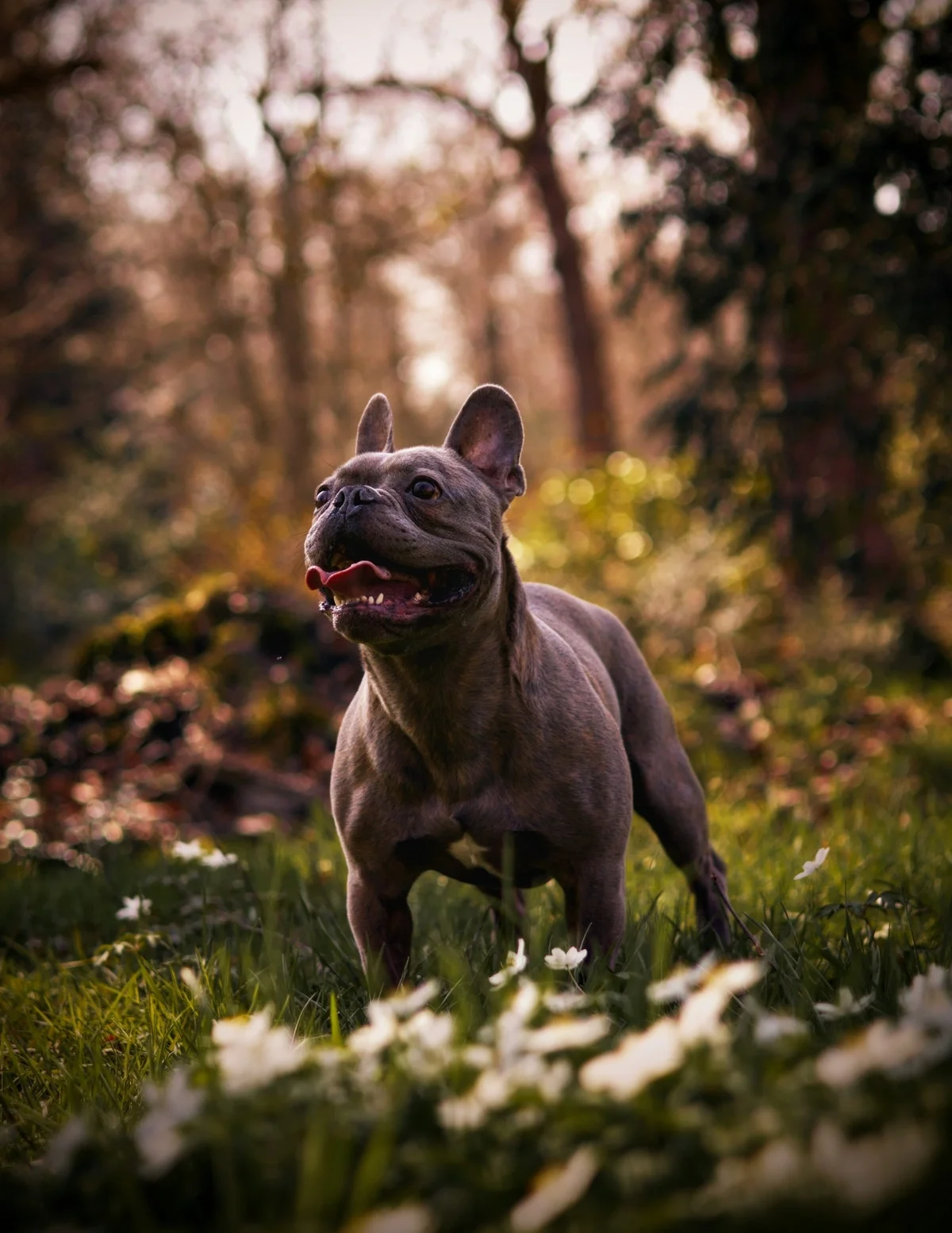
French Bulldogs ranked as the most popular dog breed in 2022, 2023 and 2024 according to the American Kennel Club. They are small to medium-sized active, intelligent and very affectionate dogs. Frenchie owners should be aware of some common health conditions that may affect their companion.
Hip Dysplasia in French Bulldogs
The Orthopedic Foundation for Animals, a group that evaluates radiographs from dogs to check for anomalies such as hip dysplasia, found that approximately one third of radiographs examined from French Bulldogs had some degree of hip dysplasia. Hip dysplasia means that the shape and fit of the ball and socket components of a hip joint are abnormal. This causes abnormal stresses on the joint and leads to early arthritis. Hip dysplasia is a painful condition. There is hope for dogs with hip dysplasia, though. In milder cases, dogs may be able to be managed with joint supplements and / or anti-inflammatory medications. Surgery to alleviate this condition such as a total hip replacement is also possible though expensive. Hip dysplasia is best prevented by selecting breeding animals that have undergone screening of radiographs to ensure they have well-formed hip joints.
Patellar Luxation (Kneecap Dislocation) in French Bulldogs
Patellar luxation refers to a dislocation of the kneecap. Approximately four percent of French Bulldogs experience this condition. The knee joint (stifle) of French Bulldogs is prone to be bowed out which puts abnormal stresses on the kneecap thereby pulling it toward the inside of the leg. The trochlear groove that the kneecap (patella) slides in on the end of the upper leg bone (femur) is often too shallow and the combination of these factors allows the patella to pop out of the groove. Several surgical options are available to treat patellar luxation including deepening of the trochlear groove, surgically repositioning the top end of the tibial bone to allow a straighter path for the patellar tendon and tightening the stifle joint capsule so the patella is less likely to slip. Without surgery, most cases of patellar luxation tend to worsen causing damage to the joint leading to arthritis and increasing the chance of a cranial cruciate ligament rupture. Dogs in which the condition is diagnosed and treated early will have a better result before long-term damage occurs.
Nictitating Membrane (Cherry Eye) in French Bulldogs
Cherry eye is the common name for a prolapse of the gland of the third eyelid (nictitating membrane). The third eyelid is the pink tissue that originates at the inside corner of the eye that can flick up over the eyeball and temporarily cover it when the dog blinks its eye. Cherry eye is more common in dog breeds with prominent eyes such as French Bulldogs. The condition is characterized by a pink mass bulging from the inside corner of the eye. While it is not an emergency condition it is important to keep the tissue moist until you can get your Frenchie in to see your veterinarian. Treatment consists of surgery to hold the gland in place after replacing it into the pocket it usually sits in. Some dogs will have a recurrence of the prolapse. It is generally not recommended to pre-emptively perform surgery on the other, non-affected eye. While the condition is very concerning to a pet owner who sees it, it is generally easily treatable and has no long-term effects.
Brachycephalic Obstructive Airway Syndrome (BOAS) in French Bulldogs
Brachycephalic airway syndrome is a series of anatomic anomalies in dogs with short faces, such as French Bulldogs. The term brachycephalic literally means “short headed”. These anomalies include small nostrils, a long soft palate, vocal folds that get pulled into the larynx and a narrowed trachea. Affected dogs make a lot of snorting sounds as they breathe and over-heat easily with exercise. They may also experience sleep apnea like humans. Mild cases may be helped by maintaining the dog at a healthy weight and using a harness instead of a collar when walking on a leash. Severe cases may need surgery to enlarge the nostrils, shorten the soft palate or resect tissue that is pulled into the larynx. Unfortunately, there is no treatment for a narrowed trachea. Brachycephalic obstructive airway syndrome to some degree is almost inevitable with short nosed dogs like French Bulldogs. Frenchie owners should be familiar with the signs of this syndrome, should strive to keep their companion at a healthy weight and not allow them to get over-heated.
Dental Disease in French Bulldogs
French Bulldogs commonly have an underbite caused by an upper jaw that is shorter than the lower jaw. This condition is known as prognathism. In a normal jaw alignment the lower canine teeth sit in a space immediately in front of the upper canine teeth and behind the upper third incisor when the mouth is closed. When a dog has an underbite the lower canine will often hit the third upper incisor when the mouth is closed and the dog may not even be able to completely close the mouth. In some cases, extraction of the upper incisor may be needed to give the lower canine a place to rest.
Another dental condition that affects French Bulldogs is gingival hyperplasia. This condition is characterized by gum tissue (gingiva) that gets enlarged. It can get so excessive that it covers the teeth. The brachycephalic nature of Frenchies can lead to overcrowded teeth which can lead to inflammation of the gingiva that ultimately becomes hyperplastic. The treatment consists of surgically trimming the excessive tissue, often with a scalpel blade or electrosurgery in combination with a water-cooled high-speed bur that is used to do the final shaping of the gum tissue. It is best to address gingival hyperplasia before it gets too bad because the enlarged gingiva can trap food material, leading to periodontal disease which can result in teeth needing to be extracted.
Allergic Dermatitis in French Bulldogs
Allergic dermatitis is a condition that many French Bulldogs experience and is characterized by inflammation of the skin resulting in scratching and licking. Allergic dermatitis can be due to different triggers including food ingredients, fleas, various pollens or dust. Once the inflammation of the skin is triggered, it is complicated by the inevitable skin folds French Bulldogs have that trap moisture and promote the growth of bacteria or fungi. Diagnosis consists of figuring out what the dog is allergic to by feeding elimination diets, doing allergy testing and bacterial and fungal cultures in resistant cases. If the dermatitis is due to a food allergy, finding a food that does not induce the allergic response may be curative. Flea control is very important in the case of skin allergies due to flea bites. Pollens or dusts are much more difficult to avoid but hyposensitization treatments may help the dog develop a tolerance to the allergens if it can be determined through testing what the dog is allergic to. Topical treatment with hypo-allergenic shampoos or shampoos containing anti-inflammatory agents can be helpful. Systemic medications can help control symptoms but some medications may suppress the immune system increasing susceptibility to other conditions. Skin conditions can be very difficult to diagnose and treat and often require a methodical approach to achieve success.
Summary
French Bulldogs are a very popular breed. While there are some health conditions that are relatively common in the breed, most of the conditions can be managed. Understanding some of the common conditions, recognition of disease signs and early consultation with your veterinarian will help your Frenchie lead a happier, healthier life.