Common Health Conditions of Goldendoodles
By Bruce Whittle • May 4, 2026
Dr. Whittle, DVM, first decided upon a career in veterinary medicine when he was 9 years old and his first dog Blackie, a German Shepherd, died of heartworm disease. He wanted to devote his life to teaching people how to take better care of their animals both large and small so veterinary medicine was the obvious pathway. He and his wife met in veterinary school and built a rural veterinary practice immediately upon graduation. Dr. Whittle has worked on a wide variety of animal species but has developed a special interest in dentistry. He continues to find opportunities to educate others about animal care including teaching dentistry to veterinary students at various veterinary colleges. He and his wife have four large dogs and a small cat that share the house with them.
Reviewed and fact checked by Bruce Whittle, DVM
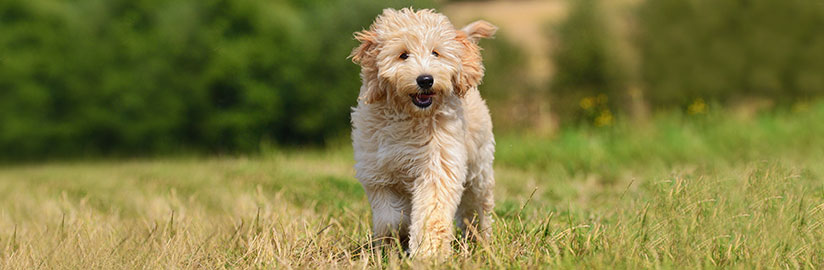
Goldendoodles are one of the most popular designer dog breeds. Being a hybrid breed, they tend to be healthier in general than either of their parent breeds, Poodles and Golden Retrievers. However, they are predisposed to the same health conditions that are prevalent in those parent breeds.
Hip Dysplasia in Goldendoodles
Hip dysplasia is a health condition known to affect larger dogs such as Goldendoodles. Statistics from the Orthopedic Foundation for Animals show that 11% of Goldendoodles examined in the period since 2021 have some degree of hip dysplasia. It is characterized by malformation of either the head of the femur or the socket in the pelvis it sits in, or both. Because the bones of the joint do not fit together properly, the joint becomes inflamed which leads to arthritis and instability. In milder cases, joint supplements and / or anti-inflammatory medications along with weight management may be sufficient. In more severe cases, surgery such as a total hip replacement may be necessary. Total hip replacement surgery is generally very successful though is expensive. Avoidance of hip dysplasia by selectively breeding dogs that have been screened to have good hips is the best way to minimize the chances of a dog developing hip dysplasia.
Patellar Luxation (Kneecap Dislocation) in Goldendoodles
Patellar luxation is usually more common in small breed dogs but Goldendoodles seem to have a higher incidence comparatively for their size. The patella (kneecap) of affected dogs tends to pop out of the trochlear groove in the upper leg bone (femur) that it normally slides in. This is usually due to a shallower than normal groove. When the patella pops out, the dog is temporarily unable to straighten the affected leg and may have a weird three-legged gait for a few steps until the patella pops back into place. In smaller dogs, the patella usually pops out to the inside of the leg whereas in larger dogs the patella may pop out to the outside of the leg. Milder cases may respond to weight management, joint supplements, anti-inflammatory pain medications and physical therapy to strengthen the muscles of the upper leg. Treatment in more severe cases usually consists of surgery to deepen the trochlear groove. Left untreated, patellar luxation results in the development of arthritis in the joint.
Progressive Retinal Atrophy (PRA) in Goldendoodles
Progressive retinal atrophy (PRA) is an inherited condition that was found in approximately 1% of Goldendoodles according to statistics from the Canine Eye Registration Foundation. Both Poodles and Golden Retrievers, the parent breeds of the Goldendoodle can pass this condition to their offspring. The condition is characterized by a degeneration of the rods in the back of the eye (retina) that are important for night vision. The condition also progressively affects the cones, the structures in the back of the eye that are important for color vision. Blindness is the eventual result. Often the condition progresses so slowly that an owner may not know their dog is blind at first. When their food and water is not moved and furniture is not rearranged, dogs who become developmentally blind due to progressive retinal atrophy adapt very well since the disease itself is not painful.
Dilated Cardiomyopathy (DCM) in Goldendoodles
Dilated cardiomyopathy is a condition in which the chambers of the heart become enlarged and do not work efficiently. It tends to affect middle aged and older, large-breed male dogs, being approximately twice as common in male dogs as in female dogs. There are many proposed causes such as genetics, viral infections, nutritional deficiencies and idiopathic causes meaning the cause is unknown. Grain-free diets have been suspected as causing DCM but ongoing research points to diets containing peas, lentils or potatoes as a major ingredient as being the prime suspects. In Golden Retrievers, a parent breed, DCM has been associated with taurine deficiency, likely from dietary causes. In Poodles, the other parent breed, a genetic predisposition has been suggested, particularly in smaller poodles. Goldendoodles can potentially develop DCM due to either genetic or nutritional causes. Dilated cardiomyopathy often progresses to congestive heart failure as the heart muscle weakens. Affected dogs often show clinical signs such as exercise intolerance, cough, lethargy, decreased appetite and even collapse. A thorough workup by a veterinarian, including imaging such as radiographs or cardiac ultrasound is needed to diagnose this condition. Dilated cardiomyopathy due to nutritional causes may respond to an appropriate diet change but cases that have a genetic basis are more often progressive. Affected dogs can be managed with diuretics to decrease the load on the heart as well as medications that help improve the contractile function of the heart.
Gastric Dilatation / Volvulus (Bloat) in Goldendoodles
Gastric dilatation-volvulus (GDV), or bloat, is a very serious condition observed in some Goldendoodles due to the depth of their chest and abdominal cavity. The stomach is “C” shaped and normally stays in a relatively fixed position. After a large meal or eating a meal rapidly, the stomach can become full of gas (gastric dilatation). Drinking a large amount of water can also lead to gastric dilatation. An owner may notice that their dog has a swollen, tender belly and the dog may drool excessively or retch repeatedly without bringing up any vomit. In severe cases, the over-full stomach twists (volvulus). In the case of a volvulus, the twisting causes the blood flow to the stomach to be squeezed off. Even if the stomach is surgically replaced into its normal position, toxins that have built up in the section of stomach with the compromised blood supply will be released into the bloodstream when the blood flow is restored. This can be life-threatening. A surgery called a gastropexy may be performed, either pre-emptively if an individual dog is perceived to be at a higher risk due to family history of bloat or at the time of surgical repair of a volvulus. A gastropexy procedure secures the stomach to the body wall so twisting is not possible. Avoiding large meals and exercise immediately after eating are important to help avoid this condition.
Ear Infections in Goldendoodles
Ear infections are relatively common in Goldendoodles due to their pendulous ears that tend to hold moisture in the ear canal. Goldendoodles who love to swim are especially at risk. Signs your dog may have an ear infection include frequent shaking of the head, an abnormal odor from the ear and redness of the skin inside of the ear. After swimming or bathing it is important to dry out the ears and possibly apply an ear cleaner that contains a drying agent. Many dogs experience chronic ear infections from a cycle of repetitive treatments with over-the-counter ear cleaners as well as repeated treatment with topically applied antibiotics. It is important to get a diagnosis of the cause and to test for antibiotic resistance in the event of treatment failure. Sometimes deep flushing of the ears under sedation will be necessary to attain sufficient cleaning of the ear canals.
Summary
Goldendoodles are affectionate, loyal canine companions. They are generally healthy but do have some potential health conditions that owners should be aware of. With proper vigilance and awareness of signs of these conditions, you can help your canine companion live a happy, healthy life.