Mental Stimulation and Enrichment
By Bruce Whittle • November 10, 2026
Dr. Whittle, DVM, first decided upon a career in veterinary medicine when he was 9 years old and his first dog Blackie, a German Shepherd, died of heartworm disease. He wanted to devote his life to teaching people how to take better care of their animals both large and small so veterinary medicine was the obvious pathway. He and his wife met in veterinary school and built a rural veterinary practice immediately upon graduation. Dr. Whittle has worked on a wide variety of animal species but has developed a special interest in dentistry. He continues to find opportunities to educate others about animal care including teaching dentistry to veterinary students at various veterinary colleges. He and his wife have four large dogs and a small cat that share the house with them.
Reviewed and fact checked by Bruce Whittle, DVM
Mental Stimulation & Enrichment for Dogs and Puppies
Since dogs have become domesticated, they live a more sedentary lifestyle than their wild predecessors. In the wild, dogs would have to spend much of their time searching for their next meal as well as just trying to avoid other animals who would do them harm. They would be on constant alert and would have had little time for play other than learning from their parents how to hunt. Domesticated dogs do not have to work for their food and are given protection by their human partners. They therefore tend to be less active which can lead to boredom as well as weight gain.
Why Puppies & Dogs Need Mental Enrichment
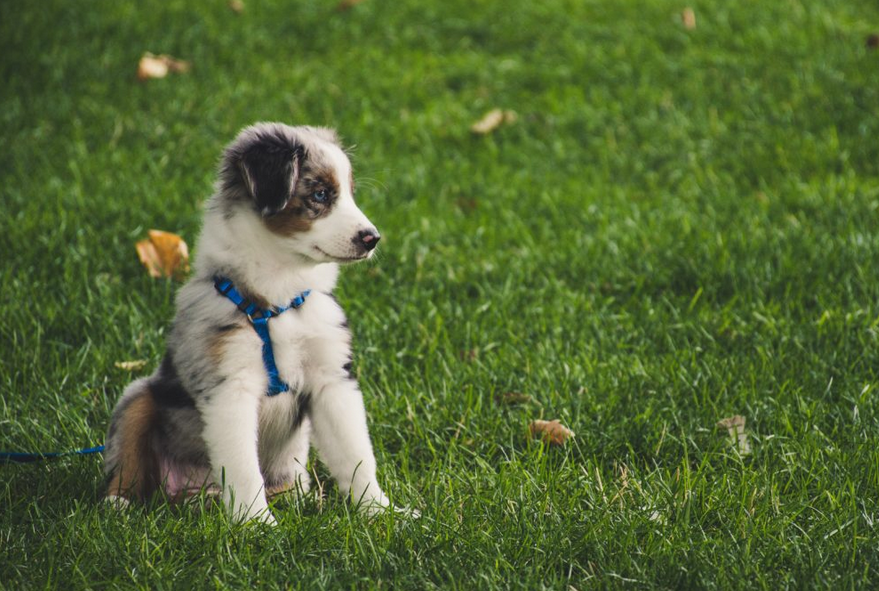
Puppies, during their development phases, exhibit behaviors such as licking everything, exploring their environment, tasting anything that seems like food, and playing and fighting with their siblings. This is how they learn. Domesticated puppies that leave their siblings around 8 weeks of age to go to their new home then require their new family to continue this training. Often, dog owners get frustrated with the new puppy because they have “too much energy”, exhibiting bad behaviors such as chewing on shoes or furniture, scratching at doors and barking. Providing mental enrichment through play or creative feeding to promote learning and reduce boredom is very important in a puppy’s development as well as throughout their life, especially in single dog households.
Creative Feeding Strategies to Engage Your Puppy or Dog
One way of keeping a dog occupied may be as simple as stretching out mealtime by putting their food in a bottle or a specially designed dispenser that makes them have to work for their food instead of being able to just gobble it out of a food dish. A clean, empty soda bottle with a smaller opening, barely larger than their food kibble, can be filled with food so they have to figure out how to dispense one kernel at a time. Some dogs become so smart they are able to hold the bottle between their paws and literally pour the food out! Commercially available options include slow feeders, food puzzles and snuffle mats. Slow feeders are food bowls that have either projections or depressions that prevent a dog from gobbling its food too rapidly, serving to extend meal-time. Food puzzles require thinking to open compartments in order to be rewarded with a treat or otherwise make it difficult for a dog to consume a treat. Kong toys or similar chew toys can be packed with a smear of peanut butter, making sure it does not contain xylitol, then stuffing the interior with their regular kibble as tightly as possible. This can be frozen to make it even more difficult for a dog to clean it out too quickly. Snuffle mats are enrichment devices that are similar to shag carpet and allow treats to be hidden within soft “fingers” so that dogs have to use their sense of smell to find the hidden treats. All of these options combine learning and food rewards. Using a variety of these strategies and rotating their use may be necessary in smart dogs that easily figure out how to beat the system. Care must be taken to not significantly increase the daily calorie intake thus leading to obesity. Instead, their regular kibble can be used along with low calorie, nutritious treats such as pieces of carrot or apple, green beans, and small pieces of lean meat or cheese.
Interactive Enrichment Play & Obedience Training for Dogs
Enrichment play also includes strategies such as obstacle courses, scent training and obedience drills. An indoor obstacle course can be set up, using furniture arranged so a dog can go under, jump up on or off, or go around, combining it with obedience training to reinforce skills such as sit, down, crawl and up. Clicker training is a great strategy that many dogs will respond to favorably in lieu of constantly giving treats. A clicker can provide an immediate recognition for a dog exhibiting a positive behavior such as responding to a command such as “sit” or “stay”. Scent training can take several forms including placing a treat in one hand and having the dog pick which hand it is in as well as hiding an object with a stronger scent and having the dog find it. Taking short periods of time to incorporate obedience training during the day helps keep boredom at bay while reinforcing good behaviors in the dog. Drills such as sit, stay, down, and shake help reinforce bonding with the dog. Having a dog that responds to these commands is helpful if they ever slip their leash on a walk.
Building a Happy, Well-Behaved Dog Through Daily Stimulation
Enrichment and mental stimulation are important parts of having a healthy, happy dog. Domestication has robbed most dogs of having peer interaction with their dog families, making it crucial to find ways to give a dog the social interaction with their human family that encourages learning and promotes good behavior. A quick internet search will give many good ideas on how to provide educational play with your dog. The bottom line is that it is important to spend productive time with your dog for their mental well-being and these activities will have the added benefit of being good for your physical and mental health as well!