Otitis (Ear Infection)
By Bruce Whittle • August 1, 2025
Dr. Whittle, DVM, first decided upon a career in veterinary medicine when he was 9 years old and his first dog Blackie, a German Shepherd, died of heartworm disease. He wanted to devote his life to teaching people how to take better care of their animals both large and small so veterinary medicine was the obvious pathway. He and his wife met in veterinary school and built a rural veterinary practice immediately upon graduation. Dr. Whittle has worked on a wide variety of animal species but has developed a special interest in dentistry. He continues to find opportunities to educate others about animal care including teaching dentistry to veterinary students at various veterinary colleges. He and his wife have four large dogs and a small cat that share the house with them.
Reviewed and fact checked by Bruce Whittle, DVM
What is Otitis?
Otitis is a medical term for ear infection. Ear infections are relatively common in dogs, especially in dog breeds with larger, heavier ears that hang down along the head and keep the ear canal from drying out as readily. Other dog breeds may have more erect ears but have allergy issues that predispose them to ear infection. Dogs that swim or are bathed frequently may also be prone to ear infection because of excess moisture in the ear canal.
What dog breeds are more likely to have ear infection?
Cocker Spaniels
Shar Peis
Bassett Hounds
Beagles
Golden Retrievers
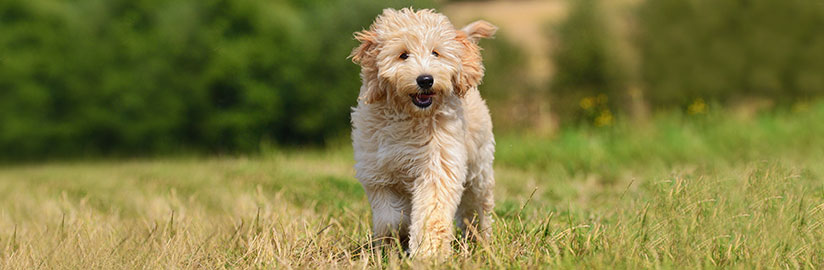
Poodles and Poodle mixes (Goldendoodle, Labradoodle, etc.)
Dog Ear Anatomy
When we think of the ears of a dog, we are typically thinking of the pinna, the portion that is an extension of the skin that surrounds the ear canal and has supportive cartilage to help hold its shape. The functional part of the ear consists of the external ear canal that extends from the opening at the base of the pinna inward to the tympanic membrane, also known as the ear drum. Past the ear drum, which is a barrier that should not allow anything past normally except for sound waves, is the middle ear containing some very tiny bones and associated structures that transmits these sound waves to the inner ear. The inner ear converts the sound waves into electrical signals that are then sent to the brain. The brain will translate these electrical signals into sounds. Although this sounds complicated, it can be important to determine which sections an ear infection involves because the treatments are different.
How does a dog ear infection start?
Infections of the external ear canal are common. Like many other parts of the body, the ear canal is not sterile but has a population of microorganisms made up of bacteria and fungal organisms such as yeasts, collectively referred to as the microbiome. When this population is healthy, the ear canal is healthy. When bad organisms get into the ear canal they will cause inflammation and an increase exudates within the canal, also referred to as “ear goop”. Most of the bad organisms are bacteria such as Pseudomonas or Staphylococcus or yeast such as Malassezia. Sometimes the ear infections are caused by bacteria that are normally present as part of the microbiome but something changes like the acid/base balance of the ear canal and those bacteria overpopulate. Excessive cleaning of the ears can sometimes lead to ear infections by disrupting the normal microorganisms. In more serious cases, the infection gets past the ear drum and into the middle ear. Middle and inner ear infections can lead to inflammation of local nerves leading to tilting of the head, a drooping eyelid on that side of the face, and a loss of balance. These infections are often painful due to build-up of pressure.
How will I know my dog has an ear infection?
Determining that a dog has an ear infection is usually not very difficult. Dogs will tend to scratch at their ears or may shake their head. Sometimes you will see some “goopy” material in the ear canal or they may shake it on you when they shake their head. Determining the cause of the ear infection can be more difficult. Your veterinarian may perform cytology which consists of swabbing the ear, smearing the swab onto a thin piece of glass then examining this smear under a microscope to examine the cell types present. Various stains can be used to highlight different types of bacteria or yeast. For example, if peanut-shaped objects are seen on the slide, yeast are likely present. If there are round shaped objects in small clusters, Staphylococcus may be suspected.
How are ear infections in dogs treated?
Once a diagnosis is obtained, the proper treatment can be initiated. This may consist of removing hair from the ears if the dog has a hairy ear canal, cleaning the ears with an ear cleaning solution and/or using a medication that is placed in the ear canal at directed intervals. Overuse of antibiotic medications can kill off the normal microbial flora allowing harmful bacteria to thrive. Often dogs are presented to veterinarians with chronic ear infections that have been treated with multiple antibiotic ointments. The ear canal is somewhat shaped like an “L” and is deep enough that it can be impossible to see the ear drum in some cases. To thoroughly clean the ear canal, your veterinarian may need to anesthetize your dog and do a deep ear flush, often under guidance of a small endoscope to be able to see all the way to the ear drum. In really severe cases, surgery may be required to allow for better drainage but this is reserved for cases where medical therapy has failed.
What can I do to keep my dog from getting an ear infection in the first place?
Prevention of ear infections in dogs includes keeping the ear canals dry and cleaning the ears periodically but avoiding over-cleaning the ears. Care when bathing to keep water out of the ears or putting cotton in the ear canals temporarily will help. Judicious use of ear cleaners recommended by your veterinarian is also helpful. If you have a breed of dog that is more susceptible to ear infections, it is important to use good preventive practices as mentioned to avoid infections in the first place.