Positive Reinforcement vs. Punishment
By Theresa Miller • April 2, 2026
Theresa is a tenured PuppySpot employee and breed expert. She is currently the manager of our Profile Approval department and interacts with our breeders daily. Theresa has been involved in the pet industry for over 20 years and has hands-on experience with many dog breeds. Theresa is also the proud pet parent of Marta, a German Shepherd Dog who is a trained service dog, a miniature Labradoodle named Eleanor, and her two cats, Bonnie and Katie!
Reviewed and fact checked by Bruce Whittle, DVM
Positive Reinforcement vs. Punishment in Dog Training: What Really Works?
Training a dog can be one of the most rewarding parts of being a pet owner, but it can also be confusing, especially when there are so many different training methods out there. Two approaches that often come up are positive reinforcement and punishment-based training. While both aim to shape a dog’s behavior, they work in very different ways and can lead to very different experiences for both you and your canine companion.
Understanding Positive Reinforcement
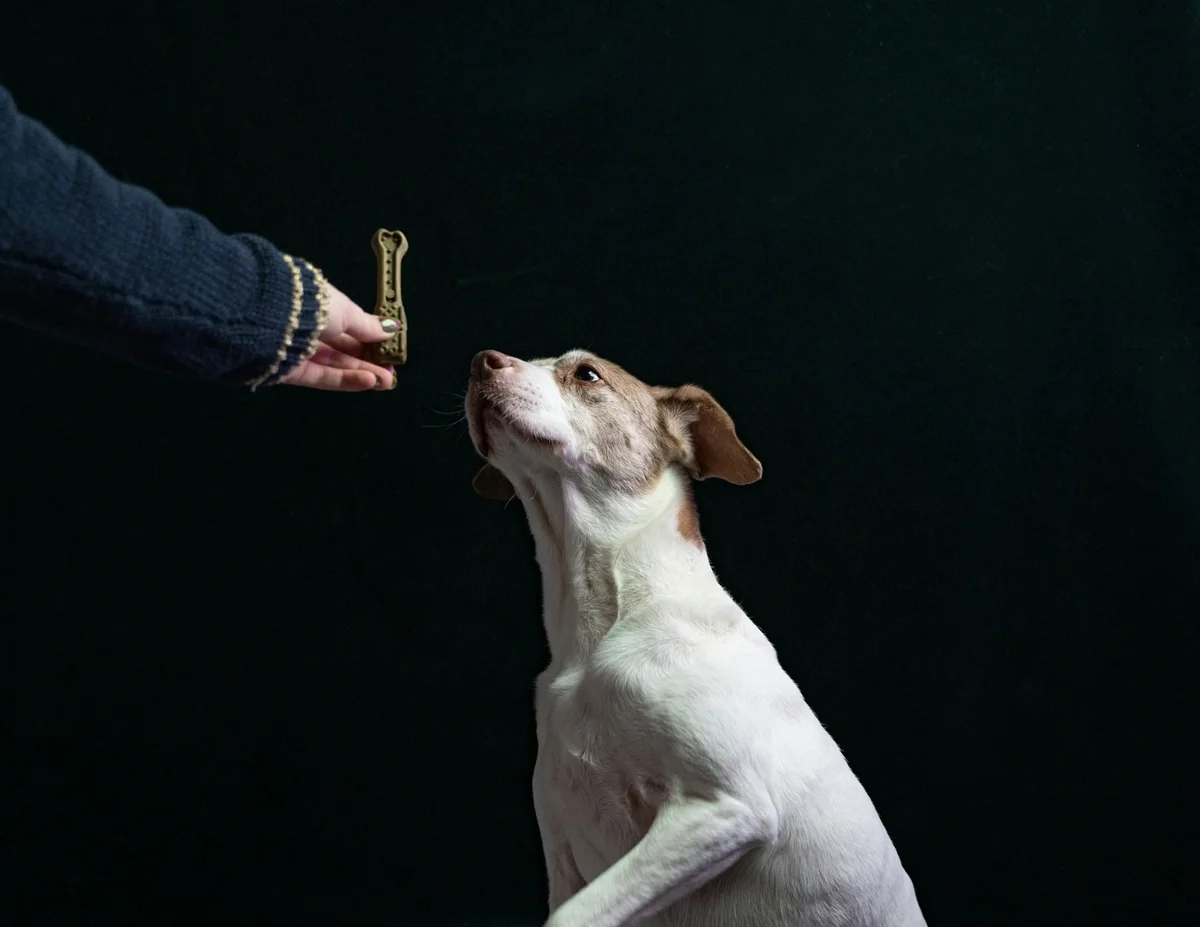
Positive reinforcement is often considered the most humane and effective way to train your dog. It focuses on rewarding the behaviors you want your dog to repeat. When a dog does something correctly, they receive something they enjoy, such as a treat, praise, a toy, or even a little extra playtime.
For example, imagine you’re teaching your dog to sit. When your dog sits after hearing the command, you immediately reward them with a treat and some enthusiastic praise. Over time, your dog begins to understand that sitting when asked will lead to something positive.
This approach works because dogs naturally repeat behaviors that bring them good results. Instead of feeling pressured or confused, they learn through encouragement. Many dog owners find that positive reinforcement not only helps dogs learn faster but also makes training sessions more enjoyable for everyone involved.
Another advantage is that it helps build trust. When dogs feel safe and supported while learning, they tend to become more confident and willing to try new behaviors.
Understanding Punishment-Based Training
Punishment-based training, on the other hand, focuses on reducing unwanted behavior by introducing a negative consequence. The idea is that if a dog experiences something unpleasant after doing a certain behavior, they will be less likely to repeat it.
Punishment can take different forms. Sometimes it involves adding something unpleasant, like a verbal correction or leash jerk. Other times it means removing something the dog enjoys, such as attention or playtime.
For instance, if a dog jumps on a visitor, an owner might scold the dog or turn away and ignore them until they calm down. While this may stop the behavior temporarily, it doesn’t always teach the dog what the correct behavior is.
In some cases, frequent punishment can also create confusion or anxiety in dogs, especially if they don’t fully understand why they’re being corrected.
Creating a Positive Training Experience
The biggest difference between positive reinforcement and punishment is the focus of the training. Positive reinforcement emphasizes teaching and encouraging the correct behavior, while punishment focuses discouraging the wrong one.
Successful dog training usually comes down to patience, consistency, and clear communication. When dogs understand what behaviors earn rewards, they become more motivated to learn and participate.That doesn’t mean ignoring any unwanted behaviors completely.
Instead, most trainers will recommend redirecting the dog to a better behavior and reward that choice. This helps the dog learn what is expected without creating fear or frustration.
Final Thoughts
At the end of the day, dogs learn best when they clearly understand what behavior earns rewards and praise. When comparing positive reinforcement vs. punishment in dog training, many owners discover that encouraging the right behavior is often more effective and more enjoyable than focusing only on correcting the mistakes. When learning is fun and rewarding, dogs are much more likely to succeed.